I remember the first time I unfolded a large foldable phone in public. Heads turned. Conversations paused. There is something undeniably futuristic about a device that transforms in your hands. The excitement around foldables always carries a quiet, lingering question in the background: how long will this actually last?
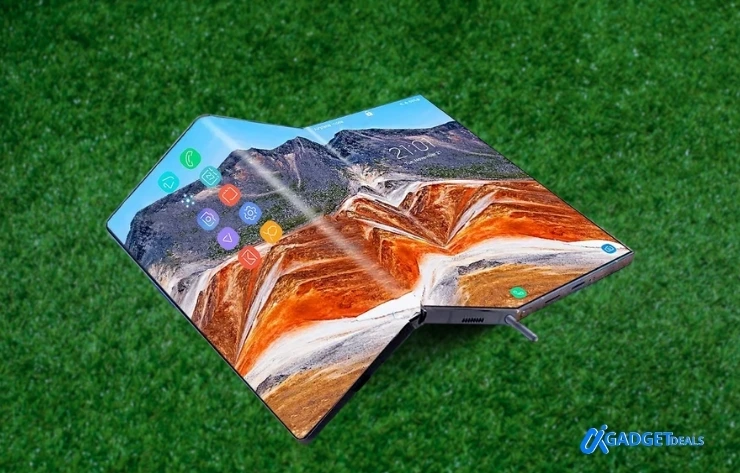
That question now sits at the center of Samsung’s most ambitious foldable yet, the Galaxy Z TriFold.
Samsung is preparing to introduce its first-ever tri-fold smartphone in early 2026, and the internet has already done what it does best stress-testing the future. Early durability testing suggests the Galaxy Z TriFold is pushing the very limits of what current folding technology can realistically handle.
In This Post......
- Samsung Galaxy Z TriFold Specification at a Glance:
- Galaxy Z TriFold Durability Test: What Happened?
- Galaxy Z TriFold Scratch & Screen Test
- Dirt Test: Where Things Get Uncomfortable
- Bend Test: The Breaking Point
- The Other Side of the Story: Fold Count Endurance
- First-Generation Reality Check
- Should You Be Worried?
- Frequently Asked Questions
- Final Thoughts
Samsung Galaxy Z TriFold Specification at a Glance:
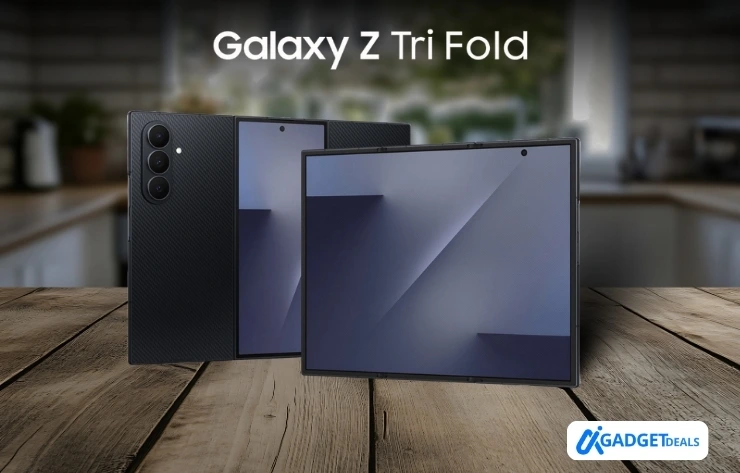
| Category | Specification (USA) |
|---|---|
| Launch | Announced: Dec 2, 2025Release: Dec 12–15, 2025 in South Korea, USA release date: Late December 2025, or Early 2026. |
| Networks | GSM / CDMA / HSPA / EVDO / LTE / 5G Sub-6GHz & mmWave support |
| Carrier Compatibility | Verizon, AT&T, T-Mobile, US Cellular |
| SIM | Single Nano-SIM + eSIM (Dual eSIM capable; carrier dependent) |
| Body Dimensions | Unfolded: 159.2 × 214.1 × 3.9–4.2 mm Folded: 159.2 × 75 × 12.9 mm |
| Weight | 309 g |
| Build | Gorilla Glass Victus Ceramic 2 (front, folded) Plastic foldable display Ceramic-glass fiber reinforced back Aluminum frame + titanium hinge |
| Protection | IP48 (dust >1mm & water up to 1.5 m for 30 min) |
| Main Display | 10.0″ Dynamic LTPO AMOLED 2X 120Hz, HDR10+ |
| Main Display Peak Brightness | Up to 1600 nits |
| Main Display Resolution | 1584 × 2160 (~269 ppi, 4:3) |
| Cover Display | 6.5″ Dynamic LTPO AMOLED 2X 120Hz |
| Cover Display Brightness | Up to 2600 nits |
| Cover Display Resolution | 1080 × 2520 |
| Operating System | Android 16 with One UI 8 (USA) |
| Chipset | Qualcomm Snapdragon 8 Elite (3 nm) |
| CPU | Octa-core (2×4.47 GHz + 6×3.53 GHz Oryon V2) |
| GPU | Adreno 830 (up to 1200 MHz) |
| RAM | 16 GB |
| Storage Options | 512 GB / 1 TB (UFS) |
| Expandable Storage | Not supported |
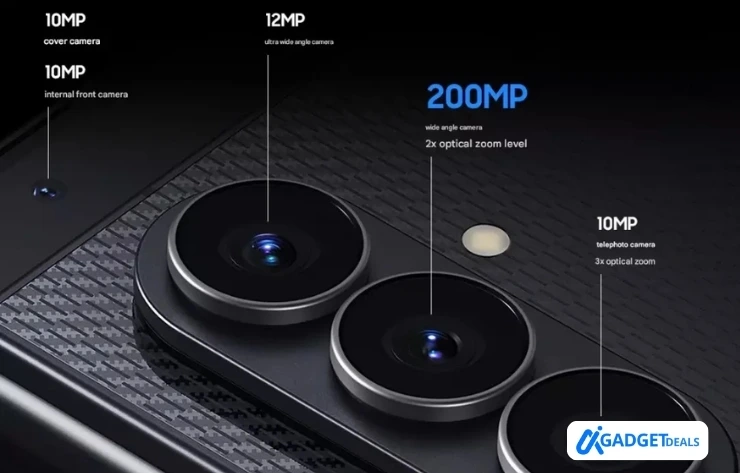
| Rear Cameras | 200 MP wide (OIS, PDAF) 10 MP telephoto (3× optical, OIS) 12 MP ultra-wide (120°) |
| Rear Video | 8K @30fps 4K @60fps 1080p @ up to 240fps 10-bit HDR, HDR10+ |
| Front Camera (Inner) | 10 MP ultra-wide |
| Cover (Front) Camera | 10 MP wide |
| Front Video | 4K @60fps 1080p @60fps |
| Audio | Stereo speakers No 3.5mm headphone jack |
| Wi-Fi | Wi-Fi 6E / Wi-Fi 7 (tri-band) |
| Bluetooth | 5.4 with aptX HD |
| Navigation | GPS, GLONASS, GALILEO, BDS, QZSS |
| NFC | Yes (Samsung Wallet supported) |
| USB | USB Type-C (USB 3.x) |
| Sensors | Side-mounted fingerprint Accelerometer Gyroscope Proximity Compass Barometer |
| Extra Features | Wireless Samsung DeX Fold-enhanced multitasking Galaxy AI features S Pen Fold Edition support (sold separately) |
| Battery | 5600 mAh (Li-ion) |
| Charging | 45W wired 15W wireless 4.5W reverse wireless |
| Colors (USA) | Crafted Black (others region-exclusive) |
| Model Numbers (USA) | SM-D639U / SM-D639U1 |
| Estimated USA Price | $2,199 – $2,299 USD |
Galaxy Z TriFold Durability Test: What Happened?
Shortly after the device surfaced in the wild, popular durability tester JerryRigEverything subjected the Galaxy Z TriFold to a full series of real-world abuse tests scratching, bending, exposure to debris, and heat.
The results weren’t catastrophic, but they weren’t reassuring either.
Compared to the traditional phones, or even Samsung’s established Z Fold line, the TriFold introduces multiple hinge points, which dramatically increases mechanical complexity.
According to display analyst Ross Young, more folding sections mean more stress points across the OLED layers and hinge mechanisms especially under uneven pressure.
Galaxy Z TriFold Scratch & Screen Test
Anyone familiar with foldables knows the compromise: flexibility comes at the cost of surface hardness.
The Galaxy Z TriFold’s inner display scratched far more easily than glass-covered smartphones. Even light contact with everyday objects left visible marks, reinforcing that this device demands careful handling.
That’s not entirely unexpected. Foldable OLED panels rely on softer materials to bend, and Samsung hasn’t magically solved that limitation yet — even with its latest Ultra Thin Glass refinements.
Dirt Test: Where Things Get Uncomfortable
This is where the test started to feel genuinely concerning.
When fine dust and sand were introduced, particles worked their way into the TriFold’s hinge system. As the phone opened and closed, audible grinding sounds could be heard, never a good sign for long-term durability.
According to mechanical engineer Ben Wood (CCS Insight), debris intrusion is one of the hardest problems to solve in multi-hinge designs, especially when devices are meant to fold in multiple directions. Hinges don’t just mean more movement they mean more entry points for dust.
For a device meant to live in pockets and bags, that’s a real-world risk.
Bend Test: The Breaking Point
The most dramatic failure came during the bend test.
When pressure was applied from an unnatural angle, the Galaxy Z TriFold’s display failed rapidly. Pixels tore, dark areas spread across the panel, and while the phone technically still powered on, the screen damage rendered it functionally unusable.
At that point, repair costs almost certainly exceed what most users consider reasonable effectively sidelining the device.
This doesn’t mean the phone is fragile in normal use, but it does highlight how little margin for error exists with such a complex folding structure.
The Other Side of the Story: Fold Count Endurance
To be fair, not all the results were bad.
Separate testing has shown the Galaxy Z TriFold enduring over 150,000 full folds without immediate display failure. Samsung itself claims the device is rated for up to 200,000 folds, aligning with what we’ve seen from previous Galaxy Z Fold models.
So in controlled, ideal conditions, opening and closing the phone as intended the TriFold appears to hold up reasonably well.
The issue arises when real life introduces variables: pressure, dirt, accidental bends, and uneven force.
First-Generation Reality Check
It’s important to zoom out for a moment.
This is Samsung’s first tri-fold smartphone. The company spent years refining the Z Fold and Z Flip across multiple generations. The TriFold doesn’t have that luxury yet.
Early adopters are, once again, stepping into experimental territory, trading proven durability for cutting-edge innovation.
As analyst Ming-Chi Kuo has often noted, first-generation form factors tend to prioritize feasibility over perfection. Refinement comes later.
Should You Be Worried?
If you’re expecting traditional smartphone toughness, yes this isn’t that kind of device.
But if you understand that the Galaxy Z TriFold is more like a portable display concept turned consumer product, the results make more sense. It’s not designed for abuse; it’s designed for transformation.
Still, these durability concerns raise legitimate questions about long-term ownership, repair costs, and everyday reliability.
Frequently Asked Questions
Is the Samsung Galaxy Z TriFold fragile?
The Galaxy Z TriFold is more fragile than traditional smartphones and even standard foldables due to its multi-hinge design. It performs well under controlled folding but is vulnerable to debris, scratches, and improper bending.
Can the Galaxy Z TriFold survive daily use?
Yes, with careful handling. Samsung rates it for up to 200,000 folds, but users should avoid dust exposure, excessive pressure, and accidental bending.
Does the Galaxy Z TriFold break easily?
It doesn’t break easily during normal folding, but durability tests show it can fail quickly under unnatural force or hinge contamination.
Is the Galaxy Z TriFold repairable?
Technically yes, but screen repairs are expected to be extremely expensive, potentially making repairs impractical after major damage.
Should you wait for a second-generation TriFold?
If durability is a top priority, waiting for a second-generation model could be wise. Samsung typically improves hinge design and materials significantly in later versions.
Final Thoughts
The Galaxy Z TriFold is bold, ambitious, and undeniably futuristic. But this durability test is a reminder that innovation always comes with trade-offs, especially in its earliest form.
Samsung has proven it can refine foldables over time. The question isn’t whether the TriFold concept will succeed, it’s how many generations it will take to get there.
For now, the Galaxy Z TriFold feels less like a mainstream phone and more like a glimpse into what’s coming next.