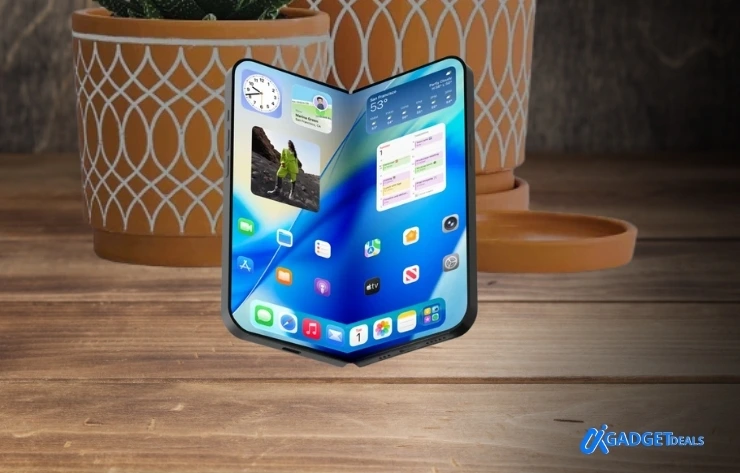
For years, the idea of a foldable iPhone felt like a rumor that refused to die. I have followed every leak, analyst note, and supply-chain whisper, and now it finally feels real. All signs point to Apple launching its first ever foldable phone the iPhone Fold in late 2026.
The iPhone Fold sounds like a premium, no-compromise device. A creaseless display, titanium body, Apple’s own modem, and a book-style design similar to Samsung’s Galaxy Z Fold. But after digging deeper into the rumors and considering real-world foldable phone experience I can’t ignore some serious question marks.
Here’s everything we know so far, plus why Apple’s foldable future may not be as flawless as it seems.
In This Post......
- iPhone Fold Design: Apple’s Take on the Book-Style Foldable
- iPhone Fold Materials & Build Quality
- iPhone Fold Display Sizes: Great for Apple Users, Small by Foldable Standards?
- iPhone Fold Crease Problem: Apple’s Biggest Win?
- iPhone Fold Cameras: Powerful, But Possibly Incomplete
- Touch ID Returns But Is That a Step Back?
- iPhone Fold Performance, Modem & Battery Life
- iPhone Fold Colors & Storage Options
- iPhone Fold Price: The Biggest Red Flag
- iPhone Fold Release Date
- Frequently Asked Questions
- Final Thoughts: Should You Be Excited About the iPhone Fold?
iPhone Fold Design: Apple’s Take on the Book-Style Foldable
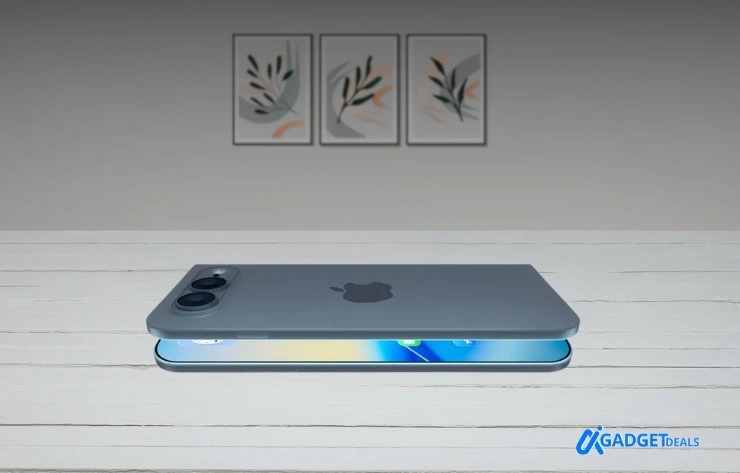
According to Bloomberg’s Mark Gurman, Apple is reportedly going with a book-style folding design, not a flip phone. This puts the iPhone Fold directly against devices like the Galaxy Z Fold series and Pixel Fold!
Industry analyst Ming-Chi Kuo reported it is around 9–9.5mm thick at the time of folding, and 4.5 to 4.8mm when unfolding. If true, this is going to be one of the thinnest foldables ever, even thinner than many standard phones when open.
iPhone Fold Materials & Build Quality
At the moment I imagined handling the iPhone Fold, its materials and build quality stood out as a clear statement of Apple’s intent. According to the Rumors point, a titanium chassis paired with a precision engineered hinge made from a blend of titanium and stainless steel, a combination designed to balance strength, flexibility, and long-term durability.
Apple is also said to be using liquid metal in the hinge mechanism, which could significantly reduce wear and also help eliminate the visible crease that plagues most foldable phones.
According to a Korean blog known for accurately leaking details about unreleased devices, Apple is prioritizing better power efficiency by reducing the size of key components such as the display driver to create space for additional battery cells. The foldable phone is also expected to feature high-density battery technology. Additionally, the upcoming C2 modem is rumored to deliver faster performance, gain mmWave support in the U.S., and offer further improvements in overall power efficiency.
iPhone Fold Display Sizes: Great for Apple Users, Small by Foldable Standards?
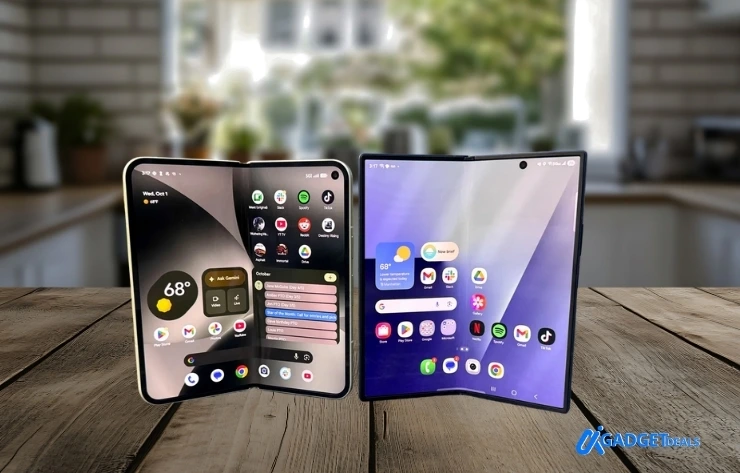
IPhone Fold expected display specifications are-
- Outer display: 5.3–5.5 inches
- Inner display: 7.7–7.8 inches
- Approx. 2713 × 1920 resolution (inner)
- iPad-like aspect ratio
Obviously you will feel massive compared to a regular iPhone, it is actually smaller than competing foldables, many of which now cross the 8-inch mark inside and offer wider front screens.
Why does this matter?
Typing on a narrow 5.5-inch outer display can be frustrating. I’ve used foldables before, and constantly unfolding the phone just to reply to a message gets old fast.
Apple may optimize iOS better than anyone but hardware limitations still matter.
iPhone Fold Crease Problem: Apple’s Biggest Win?
One of the most exciting claims is that the iPhone Fold will be virtually crease-free.
According to the leaks, Apple is using:
- A metal reinforcement plate beneath the display
- Liquid metal hinges to distribute stress evenly
- Advanced OLED engineering to reduce folding fatigue
If Apple truly eliminates visible creasing, that alone could justify waiting years longer than Samsung or Google did.
iPhone Fold Cameras: Powerful, But Possibly Incomplete
According to leaks, the iPhone Fold will feature:
- Two 48MP rear cameras
- One front camera (outer display)
- One inner camera, possibly under-display
Analyst Ming-Chi Kuo suggests that Apple’s foldable iPhone will feature a dual-camera system on the back, along with front-facing cameras that work in both folded and unfolded modes. Bloomberg’s Mark Gurman has backed this up, reporting that the device is expected to include a total of four cameras: two rear cameras, one camera on the inner display, and one on the outer display.
Well-known Weibo leaker Digital Chat Station adds that both rear cameras could use 48-megapixel sensors. Meanwhile, other reports indicate that the inner screen may rely on an under-display camera, while the outer screen could use a punch-hole design when the phone is folded..
My concerns-
➤ No confirmed telephoto lens. Under-display cameras historically deliver soft, hazy images
➤ Competing foldables already offer triple-camera systems
Apple’s image processing could help, but physics still applies. An under-display selfie camera is a gamble and not one Apple usually takes lightly.
Touch ID Returns But Is That a Step Back?
To save internal space, Apple is rumored to drop Face ID and use a side-mounted Touch ID button instead.
While Touch ID is reliable, but it introduces-
- Accidental unlock risks
- Ergonomic issues (especially for left-handed users)
- Less premium feel compared to Face ID on a $2,000+ phone
It makes sense from an engineering standpoint, but it doesn’t feel like a “future iPhone.”
iPhone Fold Performance, Modem & Battery Life
Apple plans to use its second-generation C2 modem, continuing its move away from Qualcomm.
According to the rumors, the expected benefits are-
- Better power efficiency
- Faster speeds
- mmWave support (US markets)
- No physical SIM slot
Battery rumors are more promising than expected:
- High-density battery cells
- Reported capacity between 5,400–5,800 mAh
- Slimmer internal components to maximize battery space
If true, battery life is going to be one area where the iPhone Fold beats rivals.
iPhone Fold Colors & Storage Options
According to Bloomberg journalist Mark Gurman, Apple is so far experimenting only with black and white color options for its foldable phone during supplier testing. However, he notes that these early plans may still change before the device officially launches.
That is very Apple minimal, safe, and premium.
iPhone Fold Price: The Biggest Red Flag
According to multiple reports, the foldable iPhone is expected to sit firmly in the ultra-premium price segment, with multiple reports suggesting a launch price between $2,000 and $2,500 in the United States, potentially it is going to be the most expensive iPhone ever. Analyst estimates vary, with UBS predicting a range of $1,800 to $2,000, while Fubon Research points to a price closer to $2,399. At the same time, Ming-Chi Kuo claims the foldable’s hinge could cost Apple just $70 to $80 per unit during mass production, significantly lower than earlier expectations of $100 to $120 or more, thanks to assembly design optimization and Foxconn’s production scaling. This cost reduction translates into a lower retail price or simply improves Apple’s profit margins remains unclear, but according to rumors, the iPhone Fold is still expected to attract Apple’s most loyal fans.
iPhone Fold Release Date
According to rumors from multiple analysts, Apple’s foldable iPhone is going to be tracking toward a late 2026 launch, though some uncertainty remains. Industry analyst Jeff Pu claims the device entered the New Product Introduction (NPI) phase at Foxconn in March 2025, while a separate report from Chinese outlet UDN suggests it has already moved into the engineering validation stage, signaling Apple’s preparations for mass production.
Based on supply-chain chatter, Foxconn is expected to begin large-scale manufacturing in the fourth quarter, likely around October, and reports indicate Apple may already be stockpiling components for pre-production. Both Ming-Chi Kuo and Jeff Pu believe mass production is planned for the second half of 2026, aligning with Bloomberg’s Mark Gurman, who expects a fall-season debut. However, according to Mizuho Securities, a delay into 2027 is still possible if Apple takes additional time to finalize critical design elements, particularly the hinge mechanism.
Apple is clearly taking its time and that may be both a strength and a weakness.
Frequently Asked Questions
What is the iPhone Fold?
The iPhone Fold is Apple’s rumored first foldable smartphone, expected to feature a book-style folding design with dual displays.
When will the iPhone Fold be released?
Current leaks suggest a Fall 2026 launch, though delays into 2027 are still possible.
Will the iPhone Fold have a crease?
Reports claim Apple has solved the crease issue, potentially making it the first crease-free foldable phone.
How much will the iPhone Fold cost?
Pricing rumors range from $1,800 to $2,500, with $2,399 being the most frequently mentioned figure.
Final Thoughts: Should You Be Excited About the iPhone Fold?
I believe the iPhone Fold will be the most refined first-generation foldable ever made. Apple’s focus on durability, creaseless design, and efficiency shows maturity. But refinement doesn’t automatically mean dominance. If the rumors hold true, Apple may deliver exceptional build quality, industry-leading hinge engineering, and great battery life. The iPhone Fold feels like a luxury experiment, not a mainstream revolution at least in its first generation.