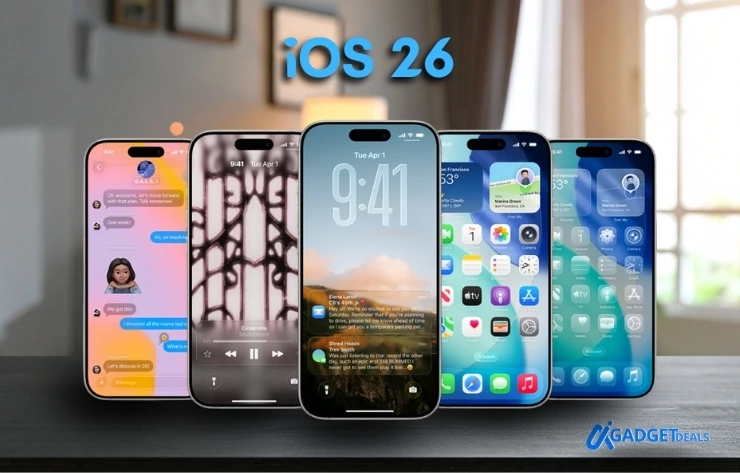
Over the years, I have noticed that the most important iOS updates don’t announce themselves loudly. They settle in quietly. One day, your phone just needs fewer taps. Fewer corrections. Less effort. This is the feeling Apple appears to be chasing with iOS 26 the iOS version expected to launch in 2026.
To be clear from the start: “iOS 26” is not an official Apple name. Apple has not confirmed any year-based rebranding. You may expect the IOS 19, 20 after the version IOS 18. But, it is surprising that Apple directly jumps to IOS 26.
In this article, we will talk about the release date, Apple Intelligence Expansion and what really changed compared to the previous version IOS 19. Let’s read-
In This Post......
- iOS 26 Release Date: Same Calendar, Different Priorities
- iOS 26 Design Direction: Refinement Without Reinvention
- Apple Intelligence in iOS 26: Deeper Integration, Narrower Access
- Siri in iOS 26: Smarter Context, Same Philosophy
- Messages, Phone & Communication
- iOS 26 Compatibility: Same Support, Bigger Divide
- Frequently Asked Questions (FAQs)
- Final Thoughts
iOS 26 Release Date: Same Calendar, Different Priorities
Every WWDC still feels like a checkpoint for Apple’s long-term vision. But in recent years, I have noticed Apple becoming far more careful about when features actually arrive versus when they are announced. iOS 26 seems to follow that same cautious pattern.
According to Bloomberg’s Mark Gurman, Apple is expected to preview the 2026 iOS version at WWDC 2026, followed by a public release in September 2026 alongside the iPhone lineup of that year.
Ming-Chi Kuo also supports this timeline but adds that Apple is increasingly comfortable delaying major features through point updates, particularly those tied to Apple Intelligence.
In other words, iOS 26 may launch on schedule but not necessarily complete.
Let’s see the release strategy at a glance:
| Aspect | iOS 26 (2026, rumored) | iOS 19 |
|---|---|---|
| WWDC Preview | WWDC 2026 | WWDC 2025 |
| Public Release | September 2026 (expected) | September 2025 |
| Feature Delivery | Gradual, staged rollout | Mostly at launch |
| Analyst View | Gurman: cautious execution | Traditional cycle |
iOS 26 Design Direction: Refinement Without Reinvention
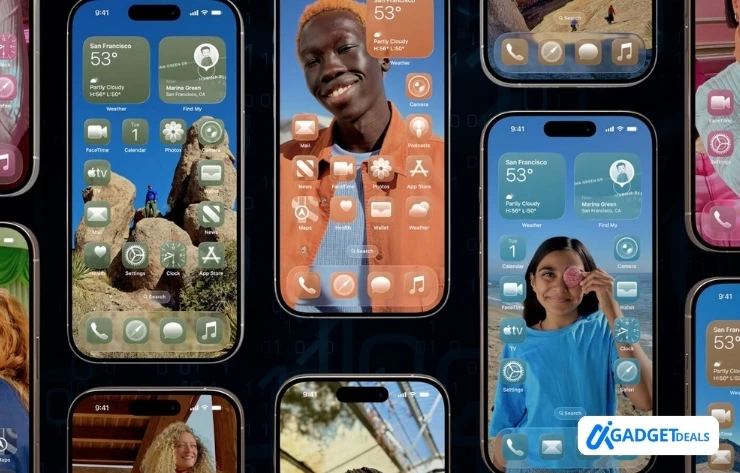
When I think about installing iOS 26, I don’t imagine a dramatic home screen transformation. Instead, I imagine the kind of update that feels invisible after a week because nothing gets in your way anymore.
Mark Gurman reports that Apple is not planning a major visual redesign for the 2026 iOS release. Instead, iOS 26 is expected to continue refining the design language introduced in earlier versions, focusing on animation smoothness, spacing consistency, and subtle UI behavior changes rather than new visual elements.
Compared to iOS 19, the goal isn’t novelty. It’s calm.
Let’s see the design comparison of iOS 26 vs iOS 19:
| Area | iOS 26 | iOS 19 |
|---|---|---|
| Major Redesign | No | No |
| Visual Focus | Micro-refinement | Stability |
| Animations | More fluid, contextual | Improved but static |
| User Impact | Feels quieter | Feels familiar |
Apple Intelligence in iOS 26: Deeper Integration, Narrower Access
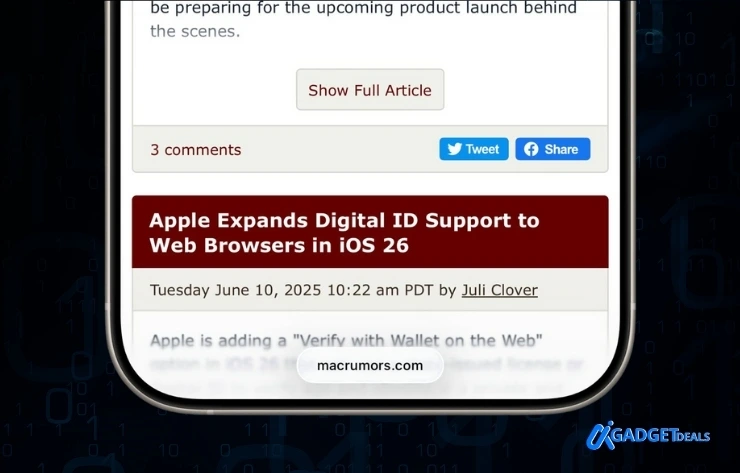
The moment your phone understands context without being asked is when AI stops feeling like a feature and starts feeling like infrastructure. Apple Intelligence appears to be heading in iOS 26.
According to Mark Gurman, Apple Intelligence in iOS 26 expands beyond its early stages seen in iOS 18 and iOS 19, becoming more deeply embedded across the system.
Ming-Chi Kuo notes that Apple continues to prioritize on-device processing, with more demanding tasks handled through Private Cloud Compute, reinforcing Apple’s privacy-focused approach.
Compared to iOS 19, Apple Intelligence in iOS 26 is expected to be:
- More context-aware across apps
- Better at summarization and prioritization
- More tightly integrated into Siri and system services
However, Apple is also expected to restrict these features to newer hardware, widening the gap between supported devices and fully capable devices.
Let’s a look at the Apple Intelligence of iOS 26 vs iOS 19:
| Feature | iOS 26 | iOS 19 |
|---|---|---|
| AI Integration | Deep, system-wide | Early expansion |
| Processing Model | On-device + private cloud | Mostly on-device |
| Context Awareness | Cross-app | Limited |
| Hardware Access | More restricted | Less restricted |
Siri in iOS 26: Smarter Context, Same Philosophy
Siri has never felt like talking to a person and Apple doesn’t seem interested in changing that. Instead, iOS 26 focuses on making Siri less wrong, not more expressive.
Gurman reports that Siri in iOS 26 gains broader app intent awareness, allowing it to understand tasks that span multiple apps. Ming-Chi Kuo adds that Apple is intentionally avoiding full conversational AI, prioritizing reliability, speed, and predictable behavior.
Compared to iOS 19, Siri becomes more useful but not more human.
iOS 26 vs iOS 19: Siri Comparison
| Area | iOS 26 | iOS 19 |
|---|---|---|
| Context Understanding | Cross-app | App-specific |
| Accuracy | Higher | Improved |
| Conversational Ability | Still limited | Very limited |
| Apple’s Strategy | Reliability-first | Transitional |
Messages, Phone & Communication
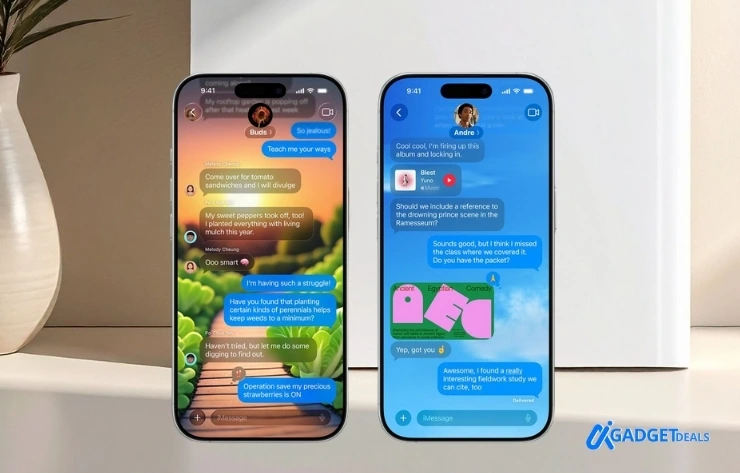
The first time a phone call translates itself in real time, it doesn’t feel futuristic, but it feels overdue. This is the kind of improvement Apple is leaning into with iOS 26.
According to Gurman, iOS 26 expands Live Translation across Calls, FaceTime, and Messages, improving consistency over the more limited rollout seen in iOS 19. Spam filtering, voicemail transcription, and contextual call summaries are also expected to improve incrementally.
These changes won’t dominate keynote slides , but they reduce daily friction in meaningful ways.
Let’s look at the communication feature comparison between iOS 26 and iOS 19:
| Feature | iOS 26 | iOS 19 |
|---|---|---|
| Live Translation | Broader, more reliable | Limited |
| Spam Filtering | Smarter, AI-driven | Rule-based |
| Voicemail | Better summaries | Basic transcription |
| Overall Focus | Convenience | Core functionality |
iOS 26 Compatibility: Same Support, Bigger Divide
Every iOS release supports more phones than it fully serves. iOS 26 continues that pattern.
According to Ming-Chi Kuo, iOS 26 is likely to support a similar device range as iOS 19, potentially starting from iPhone 12 and newer. However, Apple Intelligence features will likely be available on fewer models due to increased processing demands.
So while many users will install iOS 26, fewer will experience what truly defines it.
Let’s see the iOS 26 vs iOS 19 Compatibility:
| Aspect | iOS 26 | iOS 19 |
|---|---|---|
| OS Support | Likely iPhone 12+ | iPhone 12+ |
| AI Feature Access | Narrower | Broader |
| Performance Focus | Efficiency-first | Capability expansion |
| User Experience Gap | Larger | Smaller |
Frequently Asked Questions (FAQs)
What is iOS 26 and when will it be released?
iOS 26 is Apple’s rumored 2026 iPhone software update. Analysts expect a preview at WWDC 2026 and a public release in September 2026 alongside the new iPhone lineup.
Which iPhones will support iOS 26?
iOS 26 is expected to support iPhone 12 and newer devices. However, advanced Apple Intelligence features may be limited to the latest models.
What’s new in iOS 26 compared to iOS 19?
iOS 26 focuses on refined design, deeper Apple Intelligence integration, smarter Siri, improved Live Translation, and enhanced communication features like better voicemail summaries and spam filtering.
How does Apple Intelligence improve in iOS 26?
Apple Intelligence in iOS 26 expands cross-app context awareness, offers on-device + private cloud processing, and provides more intelligent task suggestions, while prioritizing privacy.
Will Siri be more conversational in iOS 26?
Not fully. Siri in iOS 26 is more context-aware and reliable, especially across apps, but Apple maintains a reliability-first approach rather than full conversational AI.
Does iOS 26 change the iPhone design or interface?
No major redesign is expected. iOS 26 focuses on micro-refinements in animations, spacing, and smooth interactions for a more polished user experience.
Will iOS 26 improve translation and calls?
Yes. Live Translation will be broader and more reliable, supporting Calls, FaceTime, and Messages, while voicemail and spam filtering are enhanced for convenience.
Final Thoughts
I don’t expect iOS 26 to feel revolutionary on day one. It won’t dominate social media. It won’t shock long-time iPhone users. But over time, it will quietly reshape how the iPhone behaves especially for users with newer hardware.
According to analysts like Gurman and Kuo, Apple is no longer chasing feature parity. It’s building a long-term software foundation, one designed for AI-heavy computing, foldables, and future hardware categories.
Compared to iOS 19, iOS 26 doesn’t feel revolutionary. It feels intentional and that might be Apple’s most confident move yet.